



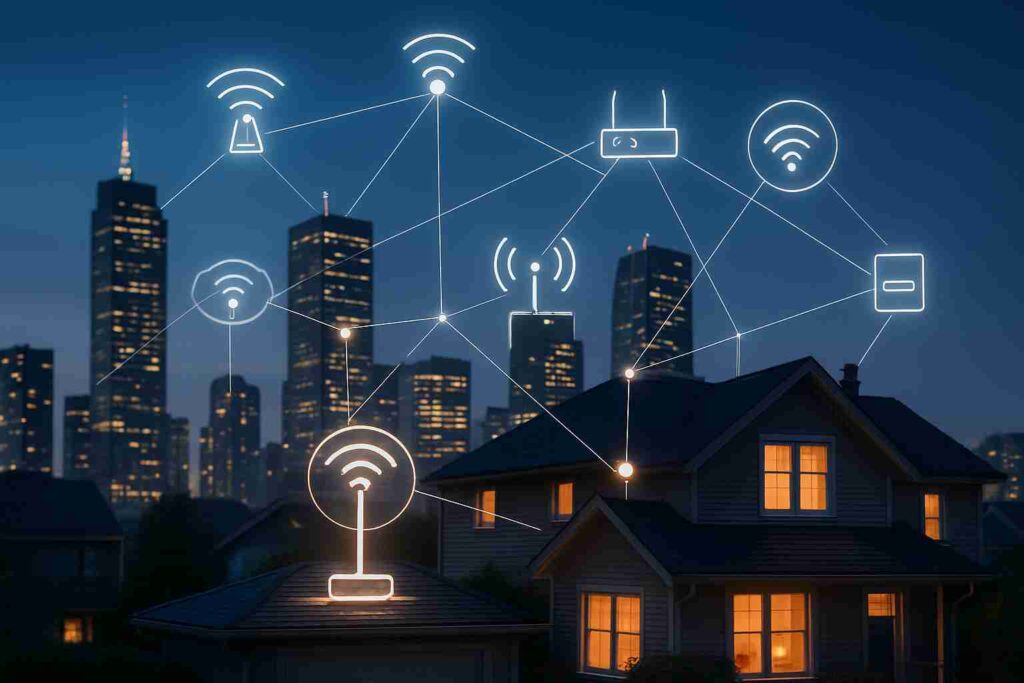
Wireless mesh networks are redefining how we approach internet connectivity, offering a robust solution for reliable and extensive coverage. This article explores the intricacies of mesh networking technology, its advantages, and how it transforms connectivity across varied environments, ensuring a consistent and efficient internet experience.
What is a Wireless Mesh Network?
In the realm of wireless mesh networks, Meshtastic Devices represent a significant innovation in off-grid communication. This decentralized network leverages the LoRa (Long Range) radio protocol, emphasizing low-power and long-distance communication over unlicensed radio bands. Originating as a community-driven project in early 2020, Meshtastic offers a robust solution for environments where conventional communication structures falter or are absent, like remote hiking trails or during emergencies.
At the heart of Meshtastic Devices is the ability to extend messaging reach by rebroadcasting messages across nodes, forming a resilient mesh. This system facilitates connecting a single device to a phone, allowing seamless messaging in areas lacking standard connectivity, pivotal during scenarios like natural disasters. Cities are exploring Meshtastic as a backup communication network, ensuring community cohesion when traditional networks collapse.
While Meshtastic excels in bridging communication gaps, it relies on line-of-sight, meaning obstacles like buildings or natural terrains may hinder its effectiveness. Despite limitations like bandwidth constraints, the system’s open-source nature attracts a vibrant community of contributors, continually refining its potential applications across off-grid environments.
How Mesh Networking Works
In a mesh network, nodes collaborate to efficiently route data across the network. Each node, whether a Meshtastic Device or another capable device, serves as both a client and a router, seamlessly directing information to the closest device. This cooperative approach enhances connectivity by distributing the data traffic dynamically, thus maintaining network reliability. Mesh clients, like laptops and smartphones, send requests that mesh routers process and forward intelligently, optimizing paths to reach their destinations swiftly. One of the key strengths of mesh networking is its ability to integrate smoothly with various wireless technologies, including the widely adopted 802.11 standards. This adaptability ensures that mesh networks perform effectively in diverse settings—from urban landscapes bustling with interference to remote regions with sparse connectivity.
By self-organizing and self-healing, mesh networks adapt to node additions or losses without manual intervention, making them remarkably resilient. As each node can potentially communicate with any other, they eliminate single points of failure. Their intrinsic flexibility ensures that even if a link breaks, data automatically reroutes through adjacent nodes, preserving the fluidity and integrity of the network. This principle forms the backbone of mesh networks’ growing prominence, underpinning modern solutions like Meshtastic Devices and myriad others, which redefine seamless wireless connectivity across environments.
Advantages of Wireless Mesh Networks
Deploying wireless mesh networks provides numerous benefits that cater to both home and office environments, setting the stage for the future of seamless connectivity. These networks are inherently scalable, allowing additional nodes to easily integrate into existing systems without requiring extensive rewiring or configurations. This feature ensures that as connectivity needs grow, the network can expand correspondingly, supporting an increasing number of devices without sacrificing performance.
Reliability is another significant advantage of wireless mesh networks. With each node acting as a potential pathway for data transmission, the network can re-route data if a particular node fails, maintaining continuous connectivity without interruptions. This redundancy transforms traditional network challenges into minimal concerns, creating a robust system suitable for environments requiring consistent and reliable access.
Cost-effectiveness further distinguishes wireless mesh technology. By minimizing the need for numerous wired connections and simplifying the installation process, these networks reduce initial capital expenditures and ongoing maintenance costs. In environments prone to wireless dead zones, mesh networks excel in eliminating these gaps by providing comprehensive coverage. This results in a seamless internet experience for users, who can move freely without losing connectivity, thus enhancing productivity and satisfaction across various settings. The versatility of Meshtastic Devices for supporting diverse device types—from smartphones to IoT gadgets—further amplifies their appeal, offering unparalleled flexibility and adaptability.
Applications and Uses in Modern Connectivity
Mesh networks are rapidly transforming how we connect our devices, and Meshtastic Devices are at the forefront of this revolution. These networks find applications in diverse environments, from enhancing home automation to powering efficient office communication systems. In smart homes, mesh technology facilitates seamless interaction between IoT devices, ensuring that sensors, lights, and smart appliances communicate without interruption. This constant connectivity enhances automation tasks, making everyday life smoother and more efficient.
In office spaces, mesh networks enable robust connectivity across sprawling office floors. The ability to eliminate dead zones ensures that video conferences, file transfers, and collaborative tools operate without hitches. This technology supports flexible working environments where employees can move freely without losing connectivity, thus enhancing productivity.
Public Wi-Fi zones also capitalize on the benefits of mesh networks by providing reliable internet access across large public areas such as parks, malls, and airports. The meshed architecture allows for even distribution of the network load, preventing bottlenecks during peak usage times. By effortlessly supporting multiple users and devices, mesh networks contribute significantly to smart city infrastructures, fostering an environment ripe for technological innovation and connectivity. From controlling traffic lights to offering city-wide internet access, mesh networks are indispensable for modern urban planning. Truly, Meshtastic Devices and similar solutions are paving the way toward a future where seamless wireless connectivity is not just a luxury but a standard expectation.
Future Trends in Mesh Networking Technology
As mesh networking evolves, the landscape is shaped by advancements like multi-radio configurations, offering enhanced reliability and speed. These configurations allow multiple data streams, boosting performance despite network congestion. The integration of next-gen technologies like Wi-Fi 6 transforms the connectivity experience, providing faster speeds and improved capacity, vital in environments bursting with smart devices.
A compelling trend is the rise of hybrid mesh networks that merge traditional Wi-Fi with new-age connectivity options, ensuring seamless transition and redundancy. Devices such as Meshtastic Devices illustrate how integrating robust hardware with software innovation sets the stage for resilient networks accommodating diverse data demands.
Emerging IoT devices and smart home systems require mesh networks capable of handling thousands of simultaneous connections. As such, mesh solutions continue to evolve, embracing AI-driven management for self-optimization and effortless adaptive coverage expansion. However, challenges like spectrum allocation and interference must be addressed to fully harness these innovations. The drive towards these advancements is relentless, with a captivating blend of practical solutions and visionary developments leading the charge. With every breakthrough, mesh networking edges closer to revolutionizing wireless connectivity, accommodating the burgeoning IoT landscape and redefining smart device interactions.
Conclusions
Wireless mesh networks offer transformative solutions for seamless internet connectivity. By understanding their operational dynamics and numerous applications, individuals and businesses can leverage mesh technology to achieve reliable, scalable internet coverage. As the technology evolves, mesh networks will continue playing a pivotal role in advancing global connectivity.