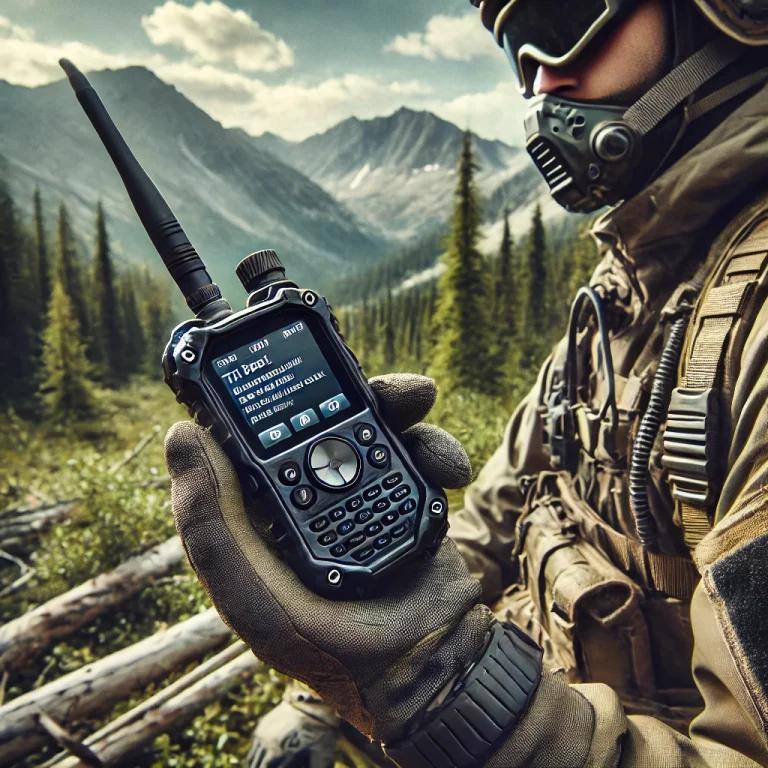



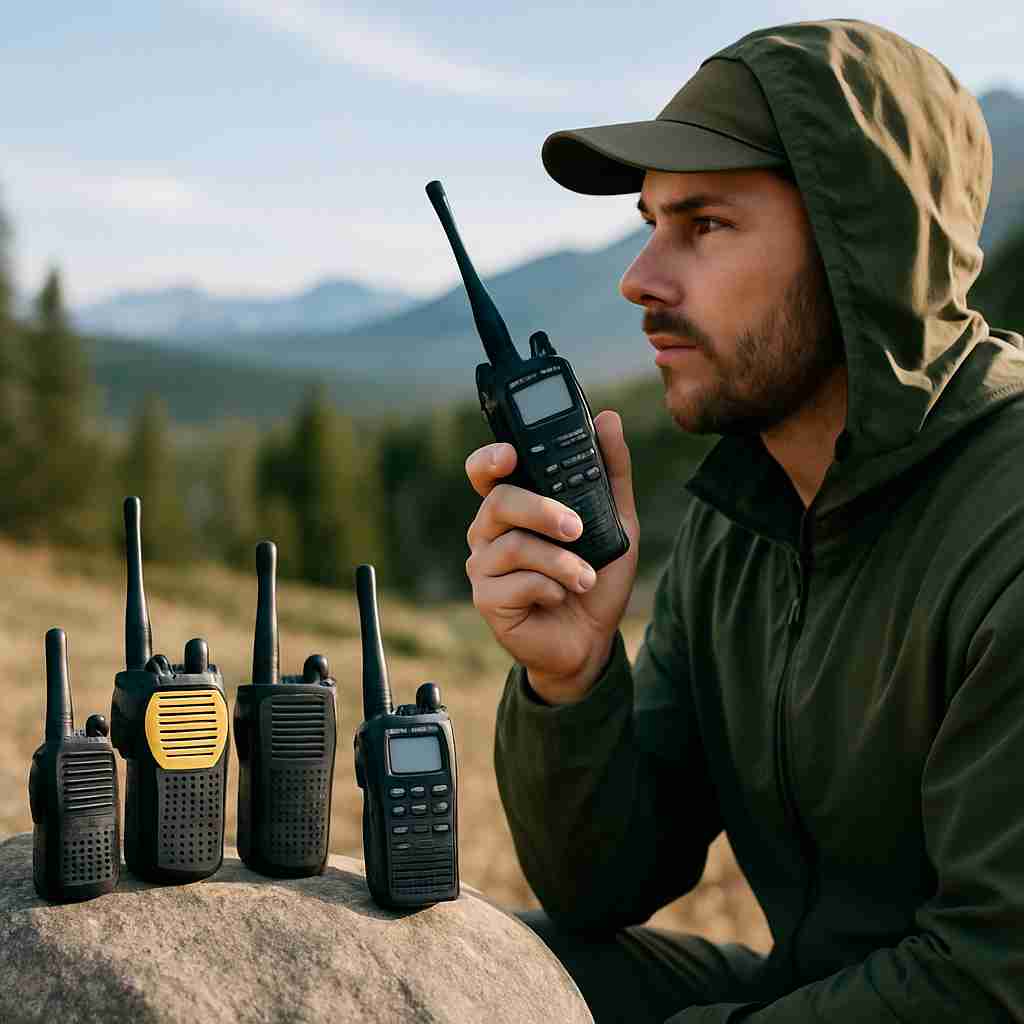
In today’s world, where staying in touch is crucial, top long-distance walkie talkies have become indispensable—whether you’re hiking, camping, or managing events. This article explores the leading high-range communication radios currently available, examining various types including GMRS and FRS, their distinctive qualities, and why they could be the perfect fit for your needs.
Understanding Two-Way Radios
Essential for both personal and professional use, two-way radios serve as crucial tools that enable bidirectional communication. By transmitting and receiving radio waves, these devices allow conversations to happen over diverse distances. Their core advantage is their straightforward operation: utilizing a push-to-talk system independent of cellular networks. A primary division among these radios exists between half-duplex and full-duplex radio systems. While half-duplex radios permit only one speaker at a time, a common trait of most walkie talkies, full-duplex models allow users to talk and listen simultaneously, much like a standard telephone.
The historical development of these communication devices is as intriguing as their present-day use. Originating from early 20th-century innovations, two-way radios initially played key roles in military and maritime messaging. They have since transformed from large, stationary setups into sleek, portable devices, impacting various sectors including public safety and outdoor adventures.
Modern advancements continuously refine long-range two-way radios, enhancing their efficiency, reliability, and ease of use. This ongoing progress ensures they remain vital in situations demanding quick and direct contact, demonstrating their enduring significance and versatility. Whether for daily activities or crisis events, long-range two-way radios guarantee steadfast and strong connectivity.
Long-Range Walkie Talkies: Best Options
When selecting long-range walkie talkies for your expeditions or projects, focusing on essential features that guarantee dependable communication across long distances is key. These devices are engineered to maintain strong connections over miles of rough terrain, unlike standard two-way radios. Many premium extended-range walkie talkies offer remarkable signal coverage, sometimes reaching up to 50 miles in open spaces, which makes them perfect for hiking, camping, or organizing outdoor activities. Another critical factor is battery life; seek out high-capacity lithium-ion batteries that deliver between 12 to 48 hours of continuous use.
Don’t neglect durability—choose models with water and dust resistance to tackle tough environments. Advanced noise filtering communication devices also prove invaluable by providing crisp audio even amidst distractions such as wind or engines. Consider your unique requirements when purchasing long-range two-way radios. For mountain adventures, emphasize range and battery endurance. When managing a large urban event, prioritize strong connectivity in densely populated areas. Lastly, user-friendliness matters; clear displays and intuitive controls enable smooth handling, even when under pressure. Keep these pointers in mind to pick a walkie talkie that perfectly fits your needs.
GMRS Radios: Features and Regulations
When discussing long-range two-way radios, GMRS radios stand out due to their superior power and extended reach, making them well-suited for a range of users, from business professionals to outdoor enthusiasts. GMRS radios offer seamless compatibility with FRS radios, enabling hassle-free communication between both types. One of the main benefits of GMRS is its ability to operate at higher power levels—up to 50 watts in many cases—offering a much greater range than FRS radios. In the United States, operating GMRS radios requires an FCC-issued license, which is easy to obtain and usually involves a modest fee. This license conveniently covers an entire household, rendering GMRS an efficient option for group communication.
Another important aspect is the employment of repeaters, which greatly amplify coverage. By receiving and retransmitting signals, repeaters enable communication over large distances, including challenging landscapes like hills or urban environments. Understanding technical elements such as modulation types and channel spacing is vital for getting the best performance from GMRS radios. Typically, GMRS channels use narrowband frequencies, which improve clarity and reduce interference. Users should familiarize themselves with rules around frequency use and power levels to operate legally and effectively. A thorough grasp of these factors allows users to fully leverage GMRS radios while remaining compliant with relevant regulations.
Exploring FRS Radios
Family Radio Service (FRS) radios have become a practical choice for those seeking simple communication solutions. Built for personal use, these radios offer a cost-effective, license-free way to stay in touch, making them perfect for family outings or small-scale business settings. Their capabilities have been greatly improved by advances in technology, including the use of frequency modulation methods that deliver clearer audio and reduce interference.
Operating on set frequency channels that intersect with General Mobile Radio Service (GMRS) channels, FRS radios provide greater communication flexibility and range when used with compatible devices. This ability to share channels is especially useful in group or team environments where different radio types are linked.
In real-world use, FRS radios excel during family trips or intimate gatherings, offering dependable communication without the complexity of more powerful long-range two-way radios. Their user-friendly nature is appreciated, as most have straightforward controls requiring no technical expertise. Many units are compact and easy to carry, with features tailored to enhance the user experience, such as weather alerts and privacy settings.
Whether coordinating activities at the park or managing tasks on a modest worksite, FRS radios serve as a reliable and accessible communication option, filling the gap between basic walkie-talkies and more advanced long-range two-way radios.
Advanced Features: Range and Waterproof Designs
The evolution of two-way radio technology has brought remarkable improvements, especially with innovative designs featuring impressive range capabilities and waterproof construction. Enhanced by state-of-the-art long-range two-way radios antenna technology, modern devices now offer extended coverage. Clear communication over vast distances—even in tough environments—is achievable by fine-tuning the antenna’s signal reception and transmission abilities. In addition, advancements in signal modulation have significantly boosted transmission consistency and overall reliability.
Waterproof designs have further increased these radios’ usefulness. Radios classified as waterproof endure water exposure without sacrificing performance, making them ideal for outdoor excursions, maritime activities, or demanding industrial tasks. These attributes not only improve durability but also prolong the device’s service life by minimizing water-related damage risks.
The practical importance of these features is evident through real-world scenarios. Search and rescue teams benefit from the expanded reach of long-range two-way radios, enabling uninterrupted communication across extensive areas. Simultaneously, waterproof models are crucial for marine workers facing unpredictable weather conditions. These technological advancements have reshaped radios into indispensable tools across various environments, proving their value well beyond traditional applications.
Conclusions
Whether for personal excursions or professional teamwork, premium extended-range two-way radios provide an essential solution for dependable communication. Gaining insight into the differences between models, such as GMRS vs FRS radios, along with examining features like range and water-resistant two-way radios, will help you make a well-informed decision. Choosing a high-quality two-way radio guarantees reliable and lasting connectivity no matter where your adventures lead you.