



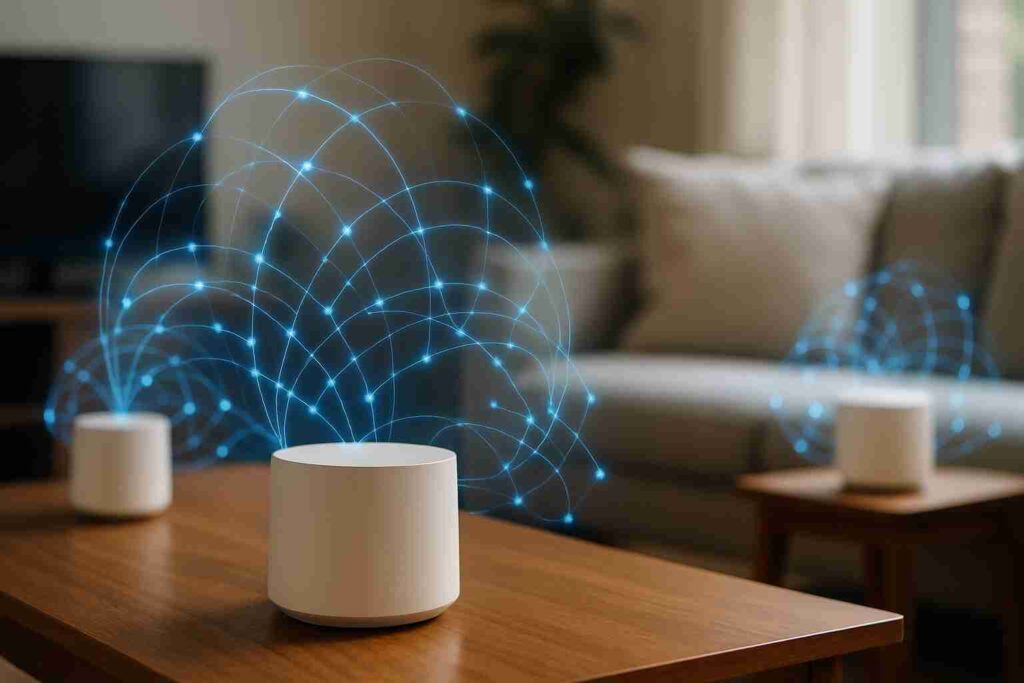
In today’s hyper-connected world, maintaining robust and reliable internet connectivity is crucial. Mesh networking offers an innovative approach to eliminate Wi-Fi dead zones and ensure seamless connectivity across all environments, from sprawling households to complex office networks. This article delves into the principles of mesh networks, top devices, and key benefits that optimize our digital lives.
Understanding Mesh Networking
Mesh networking is revolutionizing how data is transmitted across various nodes, creating a web of connectivity that enhances both reliability and resilience. Distinct from traditional networks, mesh architecture allows each node to connect independently and dynamically, forming a cooperative network where data is routed efficiently through the shortest paths available. This structure’s genius lies in its ability to self-organize and reconfigure automatically, significantly decreasing the need for constant supervision and reducing maintenance costs.
A standout feature of mesh topology is its fault-tolerant nature. Unlike star or tree configurations, where the failure of a single node can disrupt communication, mesh networks effortlessly reroute traffic through neighboring nodes. This ensures uninterrupted connectivity and robust performance, even if some nodes fail. Protocols like Shortest Path Bridging and TRILL illustrate this dynamic prowess, enabling seamless data flow across varied environments.
Incorporating advanced technologies like the LoRa mesh radio GPS, these networks extend their functionalities to innovative applications, offering long-range connectivity where conventional solutions fall short. This adaptability makes mesh networks not just a solution, but a pivotal advancement in connectivity.
Advantages of Mesh Networks
The advent of mesh networking offers distinct advantages, particularly in seamlessly connecting expansive areas without the clutter of extensive wiring. At the core, mesh networks thrive on decentralized operation, enhancing their reliability and robustness. Each node in the network participates in route management, ensuring data remains accessible even if part of the network fails, providing unparalleled fault tolerance.
Scalability is another hallmark feature, effortlessly accommodating growing demands without overhauling existing infrastructure. As new nodes are added, they integrate into the network, broadening its reach. This flexibility reduces costs significantly by eliminating the redundant installation of physical cabling, a boon in both residential and commercial realms.
Take, for example, sprawling commercial facilities or large homes, where traditional Wi-Fi solutions might falter. Here, mesh networks like LoRa mesh radio GPS stand out, offering consistent, adaptable Wi-Fi coverage. These networks easily adapt to configurations, like sudden layout changes or unexpected interferences, ensuring steady service.
In densely populated urban offices or remote work settings, LoRa mesh radio GPS empowers connectivity. The reduction in latency and potential for packet loss assures smooth operations, making mesh networks a key player in modern wireless solutions for both homes and businesses.
Top Mesh Devices of 2023
In the world of advanced mesh networking, the innovative integration of LoRa mesh radio GPS offers a fascinating advancement. LoRa technology, known for its long-range and low-power characteristics, is redefining how businesses and homes utilize mesh networks. With the explosion of IoT devices, the demand for efficient wireless communication systems like those using LoRa is surging. LoRa mesh radio GPS excels by providing robust bi-directional communication and advanced localization services. These features are perfect for applications that require precise tracking and low power consumption. For remote areas where conventional Wi-Fi struggles, a LoRa mesh radio GPS system ensures reliable connectivity without excessive energy use.
LoRa’s ability to cover expansive areas with minimal infrastructure makes it a coveted choice, especially when efficiency and eco-friendliness are priorities. Its geolocation capability is especially useful in logistics and asset tracking, allowing for the pinpointing of items across vast spaces. For those looking to adopt mesh networking, incorporating LoRa technology means embracing a future-ready, flexible, and sustainable solution.
Choosing the Right Mesh Device
When it comes to selecting the perfect mesh network device, several crucial factors play a pivotal role in ensuring your choice meets current and future needs. Begin with an assessment of the area requiring coverage. Large homes or office spaces often necessitate a system with multiple nodes for seamless connectivity. On the contrary, compact spaces may benefit from more streamlined setups. It’s important to evaluate the expected number of users and devices. For a household brimming with smartphones, tablets, or the occasional LoRa mesh radio GPS, opt for a device that handles multiple data streams effortlessly.
Equally important is internet speed. It’s crucial to select a mesh system that supports your Internet Service Provider’s (ISP) maximum bandwidth. For instance, achieving optimal performance with gigabit internet requires compatibility with cutting-edge Wi-Fi standards. Budget constraints will naturally guide decisions, but features like robust security protocols and integration with smart home systems should not be overlooked.
Finally, foresight is invaluable. Choose devices supporting emerging standards like Wi-Fi 6E to future-proof your setup. Seek mesh systems offering regular updates and efficient customer support to ensure enduring reliability and adaptability. By keeping these considerations in focus, you’ll craft a network solution perfectly tailored to your environment, whether at home or supporting sophisticated LoRa mesh radio GPS deployments in business contexts.
Mesh Networking and Future Trends
LoRa mesh radio GPS devices are paving the way for more dynamic and adaptable connectivity solutions, especially in smart home environments and IoT ecosystems. As the IoT continues to grow, the demand for efficient integration with mesh networks becomes crucial. These networks enable devices to communicate over longer distances without the need for traditional internet connectivity. This capability is particularly useful in areas with limited infrastructure. By leveraging LoRa mesh radio GPS technology, devices can efficiently maintain communication across vast spaces, significantly enhancing their functionality.
Looking forward, mesh networking technology is poised for further innovation in several key areas. Smart home systems will likely see more seamless device integration, as interoperability between different brands becomes a focal point for manufacturers. Enhanced security protocols will be developed to protect increasingly complex networks from potential threats. Efficiency improvements in data transmission will also drive the evolution of mesh networks, making them more robust and reliable.
The integration of LoRa mesh radio GPS represents a significant step towards achieving optimal connectivity and data management. With these advancements, future smart homes and businesses can expect a revolutionized approach to managing their digital ecosystems.
Conclusions
Mesh networking provides a robust solution for ensuring seamless and optimal internet connectivity in both home and business environments. By understanding its principles and choosing the right devices, users can enhance their network’s efficiency and reliability. As technology continues to evolve, mesh networking remains a pivotal component of modern digital infrastructure, promising extensive benefits and future innovations.