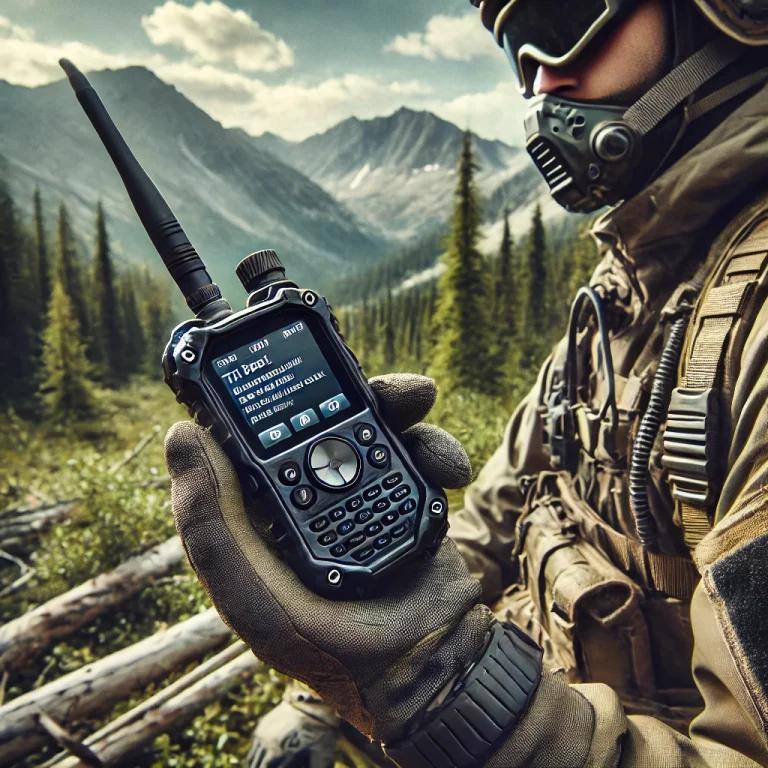



In a world full of uncertainties, having dependable crisis communication tools is essential. Whether it’s explorers navigating remote terrains or maritime professionals at sea, these devices play a crucial role in saving lives by enabling swift action during emergencies. This article explores a range of tools, such as SEND devices, SPOT messengers, and personal locator beacons, emphasizing their features and importance in critical situations.
The Role of Emergency Communication Devices
Crisis communication tools play an essential part in disaster response technology, providing a vital information link even amidst the turmoil emergencies bring. By facilitating both the transmission and reception of urgent updates, these systems close communication gaps and improve incident response coordination between people in the field and emergency personnel. Employing various methods such as radios, signal lights, and sophisticated text messaging platforms, these apparatuses guarantee information delivery to those in need, no matter how severe the conditions. Their ability to both pick up distress signals and disseminate key instructions aids in reducing disaster consequences through prompt interventions. When conventional communication infrastructure fails in fast-changing scenarios, the resilience of these tools becomes unmistakable. As technological advances continue, these systems integrate new innovations that further reinforce their crucial role in protecting lives. By maintaining open communication pathways, emergency communication solutions not only streamline immediate rescue missions but also assist with long-range recovery planning, proving their vital importance during crises. Whether facing a natural calamity or a private emergency, emergency communication devices remain key in minimizing danger and boosting safety.
Understanding Satellite Emergency Notification Devices (SEND)
Satellite Emergency Notification Devices (SEND) employ advanced technology to offer essential connectivity for individuals exploring isolated or hazardous locations. These compact devices operate through commercial satellite networks, providing worldwide coverage and dependability critical in unpredictable settings. With GPS technology embedded, SEND units can precisely identify and transmit the user’s position, even where standard cellular signals are absent. This data is sent to monitoring facilities that collaborate with local authorities to quickly coordinate urgent response, thereby reducing the time needed for assistance.
For emergency communication devices, SEND is an essential component. They hold special importance for hikers, climbers, and remote workers who may face situations requiring immediate help. A simple button press can turn a potentially dangerous incident into a manageable event, guaranteeing that help is merely a signal away. As trust in these tools increases, their role in delivering life-saving data becomes increasingly vital, allowing users to venture out confidently, reassured they are never truly isolated on their path.
SPOT Satellite Messenger: A Lifesaver in Your Pocket
The SPOT satellite messenger is a prime example of a crisis communication tools that merges GPS tracking with the Globalstar satellite communications system, guaranteeing safety and connectivity in hard-to-reach regions. Renowned for its durable performance, this convenient device provides customizable alerts that can notify responders or share your whereabouts. With its coverage reaching nearly worldwide, SPOT devices have successfully triggered more than 6,000 rescues, highlighting their dependability in life-or-death scenarios.
Building on the original SPOT, SPOT X enhances functionality by adding sophisticated features for two-way satellite messaging device communication. This upgrade enables users not only to dispatch SOS signals but also to receive acknowledgments or updates from rescuers, adding a valuable layer of confidence during emergencies. Additionally, SPOT X integrates smoothly with online platforms, allowing users to connect through familiar digital tools.
Owing to these capabilities, SPOT has become an essential resource, enabling explorers, mountaineers, and remote personnel to journey into secluded areas with greater assurance. As a part of a wider array of crisis communication tools, the SPOT satellite messenger demonstrates how modern technology can boost individual safety and optimize emergency operations coordination.
Yellowbrick Satellite Trackers: Navigating Safety in Remote Locations
For adventurers and outdoor enthusiasts, Yellowbrick satellite trackers have become essential safety tools even in the most isolated places. Enabling users to share their precise location via real-time tracking, these devices are vital for coordinating with search and rescue teams if an emergency arises. By recording routes, they allow explorers to revisit their journeys and plan safer, more informed trips. Additionally, Yellowbrick’s detailed weather forecasting supplies timely meteorological information, supporting better decision-making and boosting overall trip security.
The use of Yellowbrick trackers greatly enhances risk management. Their capacity to send and receive messages ensures that communication remains uninterrupted, even in regions lacking cellphone signals. This feature not only elevates personal safety but also accelerates emergency operations coordination by guiding rescuers exactly to the individual’s location. Through smooth integration with various digital platforms, Yellowbrick trackers serve as a lifeline, making critical communication apparatus indispensable for safe expeditions into remote environments.
The Importance of Emergency Locator Beacons
In global rescue operations, emergency locator beacons act as an essential lifeline. Devices such as ELTs (Emergency Locator Transmitters), EPIRBs (Emergency Position-Indicating Radio Beacons), and PLBs (Personal Locator Beacons) are engineered to rapidly transmit distress signals via standardized frequencies. Operating efficiently within the COSPAS-SARSAT satellite system, which offers worldwide coverage, these devices enable swift intervention during the crucial first 24 hours after an emergency—often called the ‘golden day’ for survival.
The technology powering these beacons focuses on maximizing safety. When a crisis occurs, they send a distress signal containing accurate location information to Earth-orbiting satellites. This information is then forwarded to ground stations, greatly improving rescue operations communication technology and timing. The system functions flawlessly across geographical boundaries, providing a dependable method to signal for assistance.
Unlike other crisis communication tools, these beacons are especially critical in the maritime and aviation industries, where rapid aid can mean the difference between life and death. Anyone depending on emergency communication devices to navigate tough environments must understand how these instruments operate and fit into larger rescue frameworks.
Conclusions
Indispensable to contemporary safety protocols, critical communication apparatus provide life-saving functions across land, sea, and air. The progression of their technology has increased range, improved precision, and accelerated rescue operations. By gaining insight into the different types, features, and practical uses of these tools, people can make knowledgeable choices in disaster readiness, guaranteeing their protection and security no matter where their travels take them.