


In today’s world, where maintaining connectivity is essential, devices such as push-to-talk radios, two-way radios, and walkie-talkies continue to be indispensable. Known for their dependability and effectiveness, these tools serve a crucial function in many industries. This article explores how they operate, their advantages, and their uses, emphasizing the importance of sturdy communication systems.
The Evolution of Two-Way Communication Devices
Since the era of early wireless telegraphy, two-way communication devices have experienced an impressive transformation. Starting out with large, cumbersome designs and basic features, these tools have evolved into streamlined, efficient instruments that are vital for modern connectivity. Initially, analogue technology dominated their operation, but the gradual integration of digital two-way radios introduced a new level of clarity and dependability. This shift significantly minimized interference, enhancing the quality of audio transmissions.
With continuous progress, the portability of two-way communication devices has seen remarkable improvements. More efficient batteries and smaller components enabled the creation of compact communication instruments without compromising performance. Key innovations in antenna design and frequency modulation technology greatly expanded the two-way radio frequency range, broadening communication capabilities essential for sectors like logistics and emergency services.
Improved clarity and extended reach have not only enhanced user experience but also transformed multiple industries by facilitating swift decision-making and efficient coordination. Currently, two-way communication devices are critical for connecting vast distances seamlessly. Their ongoing development promises deeper integration with contemporary digital networks and expanded multifunctional features.
How Push-to-Talk Radios Revolutionize Communication
Push-to-Talk (PTT) radios have emerged as essential tools across multiple industries, thanks to their exceptional capability to enable fast and trustworthy communication. Operating on a half-duplex basis, these two-way communication devices function similarly to a walkie-talkie, permitting one-way communication at a time. With just the press of a button, users can swiftly send messages, ensuring fluid communication during critical moments—a feature that proves indispensable in sectors such as public safety, construction, and logistics.
The appeal of PTT radios lies in providing an immediate connection without the hold-ups that come with dialing and call establishment. This prompt communication is especially crucial in emergencies, where time is of the essence. Technological progressions over the years have enhanced these radios, adding functionalities like GPS location tracking for communication devices, improved range, and superior audio clarity.
Engineered to withstand tough conditions, their tough construction guarantees both durability and performance. Therefore, two-way communication devices like PTT radios continue to be the go-to for keeping industries interconnected and agile in demanding environments.
Understanding Two-Way Radios and Their Versatility
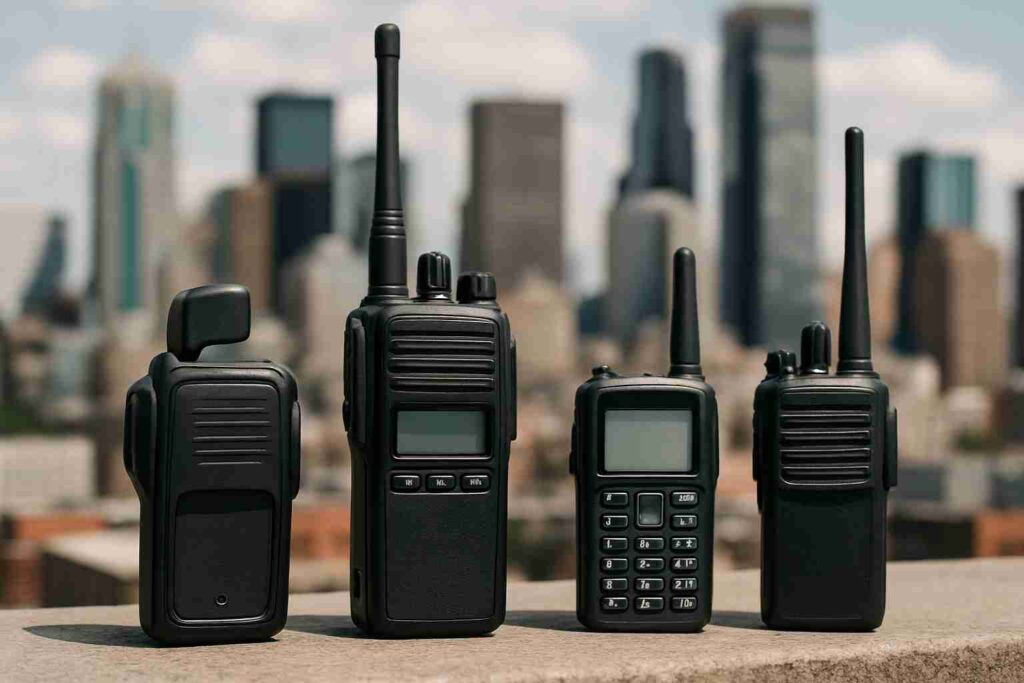
Two-way radios play a crucial role among two-way communication devices, filling communication voids in areas where mobile phones often fail. Operating within a designated bidirectional radio frequency spectrum, these devices make use of specific channels to ensure clear transmissions. Their power sources vary widely—from compact, portable battery-operated communication equipment to larger radios demanding higher energy inputs—allowing them to perform effectively across different settings. Whether maneuvering through city environments or enduring the challenges presented by rural landscapes, their adaptability is invaluable.
Users enjoy specialized features designed to meet particular requirements, including encryption that safeguards sensitive communications. Safety is further enhanced through emergency notification radios that send distress alerts quickly when necessary. Noise-cancelling two-way radios improve audio clarity, which is essential in loud surroundings. These radios handle diverse communication needs well, proving their worth at everything from construction fields to wilderness excursions. Their capacity to provide dependable, robust communication options solidifies their status as essential tools. By combining versatile features with trustworthy operation, two-way radios remain pivotal in upholding seamless communication networks.
The Role of Walkie-Talkies in Everyday Communication
Due to their user-friendly design and operational ease, walkie-talkies have become essential in both professional and recreational communication settings. Known for their simple push-to-talk communication benefits, these compact instruments simplify exchanging messages over short distances. Walkie-talkies operate within a specific two-way communication devices frequency band, enabling clear conversations without complicated installations or recurring fees.
In work environments, walkie-talkies prove indispensable. Their dependability in instant messaging ensures efficient completion of tasks, whether on construction sites or during event coordination. Functioning effectively over a few miles, they are well-suited to both cityscapes and rural areas where fast, direct connections bypass interference.
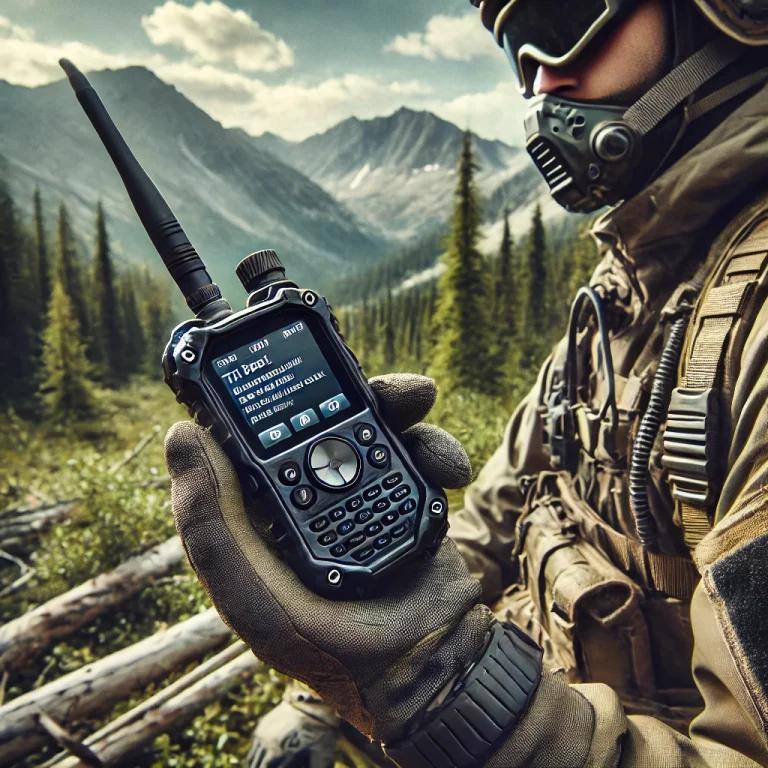
For leisure activities, walkie-talkies offer comparable advantages. Outdoor enthusiasts such as hikers and campers value their durability and straightforward operation in regions with no mobile signal. Offering affordability and simplicity, these devices are a favored choice for families and adventurers requiring reliable communication.
Such advantages highlight the lasting appeal of walkie-talkies. As dependable two-way communication devices, they seamlessly fulfill both professional and personal communication demands with unmatched ease and effectiveness.
Enhancing Efficiency with Two-Way Communication Systems
Integrating advanced innovations into two-way communication devices greatly improves operational performance for enterprises and emergency responders alike. These interactive communication technology solutions simplify communication processes, enhance response rates, and increase productivity across multiple fields. Accurate location tracking, enabled by GPS-based positioning for communication tools, plays a crucial role in effectively managing field activities and emergency operations. Meanwhile, Bluetooth-based communication infrastructures provide effortless connectivity with various devices, boosting utility by supporting hands-free calls and data exchange.
Within corporate settings, these systems enhance task coordination and facilitate seamless interaction between team members, guaranteeing instant communication without hold-ups. Such connectivity revolutionizes workflows, particularly in sectors demanding exact and prompt communication, like logistics and construction. Emergency responders, including police and ambulance teams, depend on two-way communication devices to transmit information swiftly and precisely, a vital component in saving lives and handling emergencies.
The versatility of these systems allows dependable communication in a range of environments—from bustling cities to isolated locations. Their capacity to merge state-of-the-art duplex radio systems with resilient functionality ensures uninterrupted operations no matter the conditions.
Conclusions
Devices that enable bidirectional communication, such as push-to-talk radios, two-way radios, and walkie-talkies, remain essential tools that improve connectivity across numerous industries. Their development highlights remarkable wireless connectivity innovations, boosting the reliability and efficiency of communication. By gaining insight into their functions and uses, one can truly value the vital contribution these industrial communication devices make in our interconnected world today.